
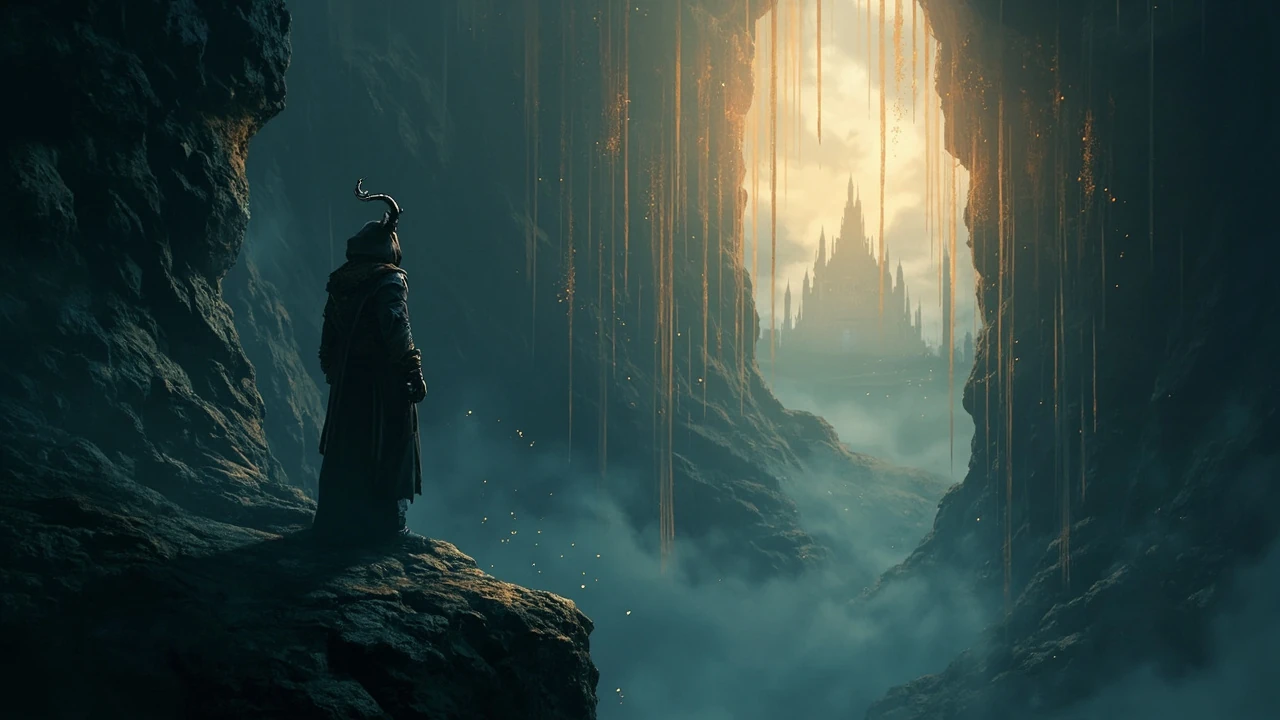
act 3 silksong: what players and developers are watching
For years, the question around Hollow Knight: Silksong has been simple: when does Hornet’s story actually end? Fans keep circling back to a single phrase in demos, interviews, and wiki summaries, the promise of a final chapter that wraps the protagonist’s arc through Pharloom. The seed phrase act 3 silksong captures that curiosity directly. It points at the moment in a Metroidvania where the map opens up, the difficulty shifts, and the developer’s narrative intent finally lands. Understanding what that third act can be, and what Team Cherry has already shown publicly, helps both players planning their first run and developers studying how a small studio builds structure around a single hero.
This article is a careful editorial guide to the act 3 silksong expectation. It is not a leak post and it is not a wish list. It separates what Team Cherry has confirmed, what the studio’s previous work implies, and where the open questions still sit. Players get a clear summary of how the studio has used chapter structure in the past so they can plan their prep loop. Developers get a structural look at why the third act matters in tightly scoped 2D Metroidvania design, and what to watch for once the game ships. The aim is to be useful in the middle of a long wait, not to declare what the ending will look like.
How Team Cherry structures chapters in Hollow Knight
To understand the act 3 silksong conversation, it helps to look at how the original Hollow Knight actually divided its campaign. The studio does not label its story in traditional open-world RPG chapters, but the community has long treated the late-game content as a third act because of the way difficulty, exploration, and narrative pressure change after the first ending. That is the structural ancestor of any act 3 silksong discussion, and it is the reason players keep reaching for the same shorthand.
In Hollow Knight, the experience was effectively built in three escalating phases. The opening grounds the player in the Forgotten Crossroads and Greenpath, the mid game pushes through the City of Tears, Deepnest, and the Royal Waterways, and the late phase introduces the Abyss, the White Palace, and the dream sequences. None of those late sections are labelled as an act in the UI, but together they form a chapter in narrative terms because they require a different mindset, a higher skill ceiling, and a willingness to chase the optional endings. The shift from “explore the world” to “climb the palace” is what gives the late phase its weight.
The shift in design pressure is what makes the third phase feel like its own chapter. The opening is built around forgiveness. Enemies telegraph heavily, benches sit close together, and the map rewards exploration with small charm upgrades. The middle is built around choice, with branching paths, mid-bosses that test combinations of charms, and a quest system that quietly tracks how much the player has actually explored. The late phase is built around mastery. Healing becomes scarcer, the audio shifts to a colder palette, and the level geometry starts demanding precise aerial movement that the opening never asked of the player. That is also when the soundtrack changes: Hollow Knight’s late phase leans on choir pads and hollow strings that never appear in the Forgotten Crossroads, and that sonic shift is a quiet signal to the player that the rules have changed.
| Phase | Core regions | Player goal | Structural role |
|---|---|---|---|
| Opening | Forgotten Crossroads, Greenpath, Fungal Wastes | Learn movement, find the first charms, reach the first city gate | Onboarding and movement training |
| Middle | City of Tears, Royal Waterways, Deepnest, Crystal Peak | Collect Dreamers, unlock new traversal, fight mid-bosses | Pressure and skill ramp |
| Late | Abyss, White Palace, dream variants, Path of Pain | Reach hidden endings, master aerial combat, complete god-tier challenges | Resolve and mastery, the implied act 3 silksong template |
Silksong, despite a new protagonist, follows the same studio philosophy. The Silksong demo and developer commentary suggest a multi-region tour of Pharloom, with each region introducing a distinct traversal tool and a distinct boss vocabulary. The third phase is the moment where Hornet gains her full kit and is expected to face the consequences of the pilgrimage. That is why the act 3 silksong framing keeps coming up: it is the design pattern players already trust from the first game, applied to a sequel that has its own movement vocabulary. Hornet’s needle, thread dash, and trap system are not reskins of the Knight’s tools, and the late phase is expected to lean on those differences rather than recreate the original’s climax in new paint.
It is worth noting that the late phase in the original game is not a single region. The Abyss, the White Palace, and the dream sequences each pull the player in a different direction, and the studio only connects them loosely. The implied third act is closer to a constellation of late challenges than a single linear corridor. That decision influenced how players talk about Silksong’s ending, because it sets the expectation that the finale will mix small, intense areas rather than dragging the player through a long post-game zone. The Path of Pain, in particular, is a single screen-long gauntlet that exists mostly to test the player’s muscle memory, and that kind of micro-level design is part of what the act 3 silksong community is reading when they predict the sequel’s finale shape.
There is also a save-data argument to consider. Hollow Knight uses Steel Soul mode, the Godmaster expansion, and the Grimm Troupe DLC as optional layers that effectively extend the third act without touching the main campaign. That separation of “main finale” and “optional finale” is something Team Cherry has refined over several content drops, and it is the most likely model for whatever act 3 silksong ends up being: a tight main ending, with a separate, harder challenge layer for players who want to keep going after the credits. The community has already started asking whether Silksong will launch with that split, or whether it will arrive as a post-launch update, and the question is part of why the act 3 silksong conversation keeps returning to structure rather than story.
What we can verify about act 3 silksong so far
Before speculating on what Hornet’s final chapter contains, it is worth separating confirmed information from community interpretation. The act 3 silksong conversation is full of fan theories, but the public evidence is small and easy to misread. A short list of verified points is the cleanest way to anchor the rest of the discussion, and it is also a useful habit for any reader who is tired of treating speculation as fact.
- Team Cherry has confirmed that Silksong is a full standalone sequel, not a DLC expansion, and that Hornet is the playable character throughout.
- The studio has publicly described the game as a Pharloom-focused adventure with more than 150 new enemy types and a quest system that runs in parallel with the main path.
- Public demos, including the one shown at Xbox events and Steam festivals, cover early and mid regions of the map, not the finale.
- There is no public statement from Team Cherry that names a final chapter “act 3” or promises a particular structure for the ending.
- The phrase act 3 silksong is a community label, not an official title, and it should be treated as shorthand for the expected finale.
For a deeper look at how the original Hollow Knight shaped modern Metroidvania expectations, the Hollow Knight Wikipedia page provides a useful timeline of the game’s design and release history. For a direct look at what has already been publicly confirmed about the sequel’s mechanics and content, the differences and new features guide for Silksong remains a current reference. Both sources are useful anchors for any developer or player trying to separate speculation from fact in the act 3 silksong conversation, and they are the two pages most worth bookmarking before launch.
That evidence is thin on purpose. Team Cherry has historically revealed story beats only after the game has shipped, and the studio’s pre-release communications are almost entirely about mechanics, not plot. Any act 3 silksong description written today is therefore a structural prediction, not a leaked chapter breakdown. Players looking for certainty should plan around the mechanics the studio has shown and treat the narrative as a discovery moment. The most reliable signal is the studio’s habit of not talking, which has held across both Hollow Knight and the long Silksong development cycle, and which has trained the community to do its own structural reading.
There is also a useful contrast with other indie studios. Many small Metroidvania teams publish a roadmap, a chapter list, or a region map before launch, and the act 3 silksong discussion would look very different if Team Cherry had done the same. The fact that they have not is part of why the community has settled on act-based shorthand: when a studio refuses to label its chapters, the players label them instead, and the labels tend to stick. That is a small but real piece of context for anyone wondering why a phrase like act 3 silksong has become so persistent in fan wikis and Discord channels.
Why Metroidvania design treats a third act differently
In a 2D Metroidvania, the act 3 silksong idea is not just a story beat. It is also a structural commitment by the developer. The opening establishes traversal, the middle introduces conflict, and the finale is expected to compress the hero’s full kit into a high-pressure set of encounters. If the third phase fails, the whole game feels padded, because players have already mastered the controls by then. Designers therefore treat a final chapter as both a test and a payoff, and the design decisions around it tend to be the most expensive in the entire project, since they are often the last thing a small team can afford to rewrite.
The pressure on a final act is partly a function of how long the player has been playing. A two-hour game can get away with a flat difficulty curve because the player’s familiarity with the kit is still shallow. A fifteen-hour game cannot. By the time a Team Cherry player reaches the late phase, they have learned how to chain abilities, read telegraphs, and plan resource use across long runs. A final act that ignores that growth feels insulting, and a final act that doubles down on it feels earned. The act 3 silksong expectation is essentially a promise that the studio will respect the player’s accumulated skill, and it is the part of the design where the studio’s reputation is most exposed.
| Design pressure | Opening act | Middle act | Final act (act 3 silksong template) |
|---|---|---|---|
| Movement | Introduce one core verb, such as jump, dash, wall climb | Stack two to three tools, test combinations | Require full kit, including risky aerial paths and reverse jumps |
| Combat | Teach spacing, healing, and one boss pattern | Introduce combo windows, ranged enemies, hazards | Demand clean execution, heal economy, and pattern recognition |
| Map | Linear corridors, one or two shortcuts | Branching biomes, mid-tier optional zones | Connected finale with optional god-room equivalents |
| Narrative | Hook the player, plant a mystery | Escalate the threat, introduce factions | Resolve personal stakes, hint at hidden epilogue |
| Audio and palette | Warm, melodic, simple motifs | Layered, region-specific themes | Sparser, colder, more ambient; signals the rules have changed |
For developers, the act 3 silksong pattern is useful because it forces decisions about difficulty curves and reward loops. Hornet already plays faster than the Knight, with a needle, a thread dash, and a craftable trap system. A third act has to use those mechanics in ways the opening and middle do not. Otherwise the late game feels like a reskinned mid game, which is a common failure mode in indie Metroidvanias that over-commit to size. The best third acts in the genre are usually short, dense, and willing to ask the player to use tools they have not touched in hours, and Hollow Knight’s White Palace is the clearest local example of that philosophy working in practice.
There is also a pacing argument that is easy to miss. The middle of a long Metroidvania is where most players experience fatigue, because the number of new abilities slows down and the map starts to feel like busywork. A strong final act resets that fatigue by shifting the player’s goal from “unlock the next ability” to “survive what is in front of me.” The act 3 silksong conversation is partly about whether the studio can pull off that shift cleanly, since the sequel’s mid game is widely expected to be longer than the original’s. If the finale is too long, the pacing benefit disappears; if it is too short, players feel cheated out of a real climax. The narrow window between those two failure modes is where most of the act 3 silksong design risk lives.
Resource economy is the other piece that tends to make or break a third act. A finale that ignores the player’s stockpile of silk, rosaries, and healing items tends to feel like a different game. A finale that quietly accounts for those stockpiles, by adjusting heal rates and shop availability, tends to feel like a continuation. That is why the act 3 silksong conversation often drifts into talk of benches, save rooms, and currency sinks: those small infrastructure choices are usually what separates a respected finale from a frustrating one, and they are the easiest details for a small team to overlook in the final six months of production.
What an act 3 silksong chapter could plausibly include
Working from the studio’s track record and the mechanics shown in public demos, the final act of Silksong is likely to lean on a small set of well-trodden design moves. None of these are confirmed, but each is consistent with the way Team Cherry has worked before, and each maps to a specific player experience rather than a generic “epic finale.”
- A new traversal tool unlocked late, such as a silk glide, a vertical wall run, or a hazard-crossing variant, to reset the mobility ceiling. The first game held back the Monarch Wings for the mid game, and the sequel has room to repeat that move in a different register. The exact tool is less important than the timing: late-game unlocks only feel meaningful if the player has already had time to feel the limits of their kit.
- A concentrated set of boss fights that combine patterns from earlier biomes, forcing the player to recall and remix learned skills. The original’s late bosses already pull moves from the Colosseum and the dream variants, and the sequel can extend that habit. Remixing is cheaper than designing new patterns from scratch, and it tends to read as a reward for players who have paid attention.
- A narrative reversal where the pilgrimage’s purpose is reframed, which is a common Silksong rumour because Hornet’s quest is described as a holy mission in the studio’s own copy. Reversing a stated goal is a cheap way to make a finale feel weighty if it is set up early enough, and it is a technique the original used with the Radiance reveal.
- Optional super-challenges that match the role of the Path of Pain, providing a mastery loop for experienced players after the credits roll. The Path of Pain is the most-cited example of Team Cherry’s willingness to ship a brutal optional layer, and the sequel is widely expected to have a comparable segment. The act 3 silksong framing usually includes that hidden layer, even though it is technically separate from the main story.
- A short, tightly tuned finale area with limited benches, in the style of the White Palace, to compress the difficulty into one sitting. The White Palace works because it respects the player’s existing skill instead of introducing new verbs at the last minute, and that is a model a small team can actually ship.
- A late-game quest resolution layer that uses the NPCs the player has already rescued, so the finale feels like the result of a long habit rather than a scripted twist. Hollow Knight’s Grimm Troupe and Godmaster expansions both rely on that kind of cross-region payoff, and it is the kind of detail that makes an act 3 silksong finale feel personal.
None of those elements are guaranteed. The point of the act 3 silksong framing is that players can read Team Cherry’s design language and predict the shape of the ending even without spoilers. That kind of predictable structure is part of why the Metroidvania genre has a dedicated community: the genre teaches a contract with the player, and players learn to read that contract. The act 3 silksong expectation is, in that sense, a reflection of how readable the studio’s design has become over time, and it is also a reflection of how consistent the studio has been in the years since the original shipped.
It is also worth acknowledging what the finale might not do. It might not add a new hub town, since hub design in Team Cherry’s games tends to live in the mid game rather than the finale. It might not introduce a co-op mode, because the studio has historically resisted multiplayer hooks and has not hinted at any in Silksong. And it might not gate the ending behind a single collectible count, since the original already moved away from that model with the Dreamers. The act 3 silksong conversation is sharper when it also includes what the studio tends to leave out, because those omissions are part of the design language too.
For developers reading this as a checklist, the honest answer is that the most likely act 3 silksong shape is the one Hollow Knight already shipped: a short, dense finale area, a small set of high-quality bosses, a tighter resource economy, and an optional super-challenge for players who want more. Anything longer, more cinematic, or more mechanically experimental would be a genuine surprise, and surprises from Team Cherry have historically come in the form of new traversal verbs rather than new narrative structures. Keeping that in mind helps set realistic expectations on both sides of the act 3 silksong conversation.
How a final chapter changes the player’s prep loop
Once a player understands that act 3 silksong is a structural expectation rather than a confirmed chapter, the practical question becomes: how should you prepare? The answer is mostly about resource management, because the late phase of a Team Cherry game is unforgiving on unprepared players. There is also a small but real risk of over-preparing, which leaves the player with unspent resources and a softer mid game. The trick is to plan for the finale without hollowing out the hours before it.
- Track which charms and crests you have upgraded, and which you actually use, before entering any new late-game zone. The act 3 silksong phase is a bad moment to discover that a build is missing a key slot or that a favourite tool has been quietly nerfed in a recent patch.
- Keep a reserve of healing items, silk, and rosaries, because shops in a final act tend to be sparse. Saving currency for the finale is more valuable than spending it on a mid-game charm that will be replaced, and that habit alone saves a lot of restarts.
- Map optional NPCs in the middle phase, since quest lines often resolve at the very end of the game. Missing a side quest in the mid game can lock the player out of an alternate ending in the finale, and that is the kind of mistake that cannot be fixed without a new file.
- Practice the hardest boss patterns you have already faced, because late bosses tend to remix earlier moves. A boss that looks new in the final act is often a combination of two patterns the player has already seen, and recognising the second pattern mid-fight is what separates a clean win from a long attrition run.
- Avoid burning rare currencies on early equipment that becomes obsolete after the next region unlock. The act 3 silksong prep loop is partly about patience, and patience is the resource players run out of fastest in the back half of a long Metroidvania.
These habits are not spoilers. They are the genre’s standard pre-finale checklist, and the act 3 silksong expectation is exactly the moment they become valuable. Players who treat the late game as a fresh start, rather than a continuation, tend to struggle with resource starvation, especially in a game with limited fast travel before the final region opens. Players who treat the late game as a checkpoint for everything they have already learned tend to do better, because the finale rewards consistency more than improvisation.
For new players, the simplest rule is to assume the finale will be a long sitting. Set aside an evening, make sure the save is in a stable state, and do not start the final area in a hurry. The act 3 silksong experience is not designed to be completed in twenty minutes, and the worst position to be in is halfway through a long gauntlet with no checkpoint in sight, especially on Steel Soul or a similar permadeath mode. Treating the late phase as its own session, with a clean break before and a save point after, is the single most reliable habit in the act 3 silksong prep loop.
Speedrunners and achievement hunters have a slightly different checklist, and it is worth mentioning because it tends to surface in the act 3 silksong conversation. They usually plan route splits, track which endings are mutually exclusive, and identify which collectibles can be safely ignored without locking an ending. That information tends to leak into the broader community within a week of launch, and it is one of the reasons the act 3 silksong discussion always shifts quickly from “what could it be” to “what is the cleanest way through it” once the game is in players’ hands.
Signals to watch when act 3 silksong is finally in players’ hands
Once Silksong ships, the act 3 silksong discussion will move from expectation to evidence. For developers, the most useful signals to look for are not the plot twists, but the structural decisions. Those choices are what make a third act feel earned or feel like a speedrun of the mid game, and they are visible within the first hour of the finale, often before the player has even reached the closing cutscene.
- Region length: a final act that adds only a few small rooms usually signals that the studio trusted the player’s existing mastery, which is a strong design choice when done well. Hollow Knight’s White Palace is roughly a third of the size of the City of Tears, and it still feels like the climax. A finale that sprawls across multiple biomes usually signals a team that ran out of time to compress, and that is a different kind of design signal.
- Boss count: a tight final act with three to five high-quality fights usually feels better than a sprawling gauntlet of repeated enemy variants. Quality matters more than count when the player already knows how to fight, and the act 3 silksong community tends to rate finales on boss quality first and boss count second.
- Healing economy: a final act that breaks the heal economy often feels unfair; a final act that simply tightens it often feels climactic. The Path of Pain is the obvious reference point, and the act 3 silksong equivalent will probably sit somewhere on that spectrum, with a stricter version of the mid-game rules rather than a wholly new system.
- Map shortcuts: late chapters that respect the player’s existing fast travel save a lot of frustration and are worth studying. A finale that ignores the map the player has already built is a missed opportunity, and a finale that quietly rearranges it to push the player toward the ending is a small but real piece of craft.
- Optional endings: the presence of post-credits content, in the Hollow Knight tradition, will shape how the act 3 silksong conversation continues after launch. The original had three endings plus a hidden fourth, and that ratio is the bar the community will measure against, even if the sequel only ships with one or two.
- Save structure: a final act that adds a hard save point before the closing boss tends to feel respectful. A final act that relies on autosaves through a long gauntlet tends to feel hostile, and the act 3 silksong community will notice the difference within a day of launch.
These are the same signals that designers can study in postmortems. They are useful regardless of whether the player finishes the game, because the design choices are visible in the first hour of any final chapter. They are also the signals that will define whether the act 3 silksong label becomes a positive term in the community or a reminder of a finale that overstayed its welcome. Community vocabulary in the Metroidvania space is unusually long-lived, and a poorly received third act can colour how players describe a game for years, especially when the studio in question has as much goodwill as Team Cherry does.
It is also worth watching how the act 3 silksong conversation evolves on streaming platforms and in video essays. Streamers tend to surface the same structural complaints within the first week: too many benches, too few, benches in the wrong place, or bosses that ignore the player’s kit. Those complaints are a useful real-time temperature check for the studio, and they are usually more accurate than review scores, which tend to compress the whole game into a single number. For developers, the act 3 silksong launch is therefore as much a listening exercise as a design one.
What developers can learn from the act 3 silksong conversation
For developers, the act 3 silksong question is a small case study in audience expectation. Team Cherry has built a fan base that is willing to map a game’s structure before the studio confirms it. That is the kind of trust indie developers spend years earning, and it is worth thinking about how the studio got there. The answer is mostly restraint. The team has shown very little of the finale, which keeps the surprise alive, and the early and middle sections are deep enough that players trust the studio to deliver a worthy ending without needing to be told what it looks like.
The structural lesson is that a final act works best when the opening and middle acts do their jobs. If the early game teaches the player well, the late game can compress time and difficulty without feeling cheap. If the mid game scales pressure consistently, the finale can lean on the player’s existing skill rather than introducing new systems at the last minute. That is the design logic that fans read when they predict an act 3 silksong finale, and it is the logic that smaller studios can borrow for their own projects, even if they do not have Team Cherry’s budget or timeline.
There is also a communication lesson. Team Cherry has stayed mostly silent about plot, mechanics for the late game, and even the exact length of the campaign. That silence has been hard for some fans to live with, but it has also kept the act 3 silksong conversation focused on structure rather than on specific reveals. Studios that talk too much about their finales often find the conversation drifting toward leaks and rumour, which is a different and less productive cycle. The Silksong discourse, for all its waiting, is unusually clean because the studio has refused to seed it with spoilers, and that is a small but real advantage in a genre where hype cycles tend to peak before the game is in players’ hands.
For small teams shipping their own Metroidvanias, the practical takeaway is to design the finale before designing the mid game, not after. The act 3 silksong expectation works because the original game’s finale is clearly the result of a design that knew where it was going. A finale written at the end of production, after the mid game is locked, tends to feel like a postscript. A finale designed early, with placeholder content, tends to feel like the climax the player was waiting for, and it gives the rest of the team a north star for the dozens of small decisions that show up across a long production.
There is a budget argument in there too. Small teams tend to run out of time in the last six months of production, and the finale is usually where that time pressure shows. Locking the finale’s structure early, even if the content is still rough, gives the team permission to spend the late production cycle polishing the mid game without worrying about whether the ending will land. That is the production logic the act 3 silksong conversation is really circling, and it is the part most worth exporting to other indie projects, regardless of whether they are Metroidvanias at all.
Finally, the act 3 silksong conversation is a reminder that a strong finale can carry a long development cycle. Team Cherry has spent years on a sequel whose finale has barely been discussed, and the community is still willing to wait, because the original’s finale was good enough to justify the trust. That kind of long-tail goodwill is rare, and it is the most valuable thing a small studio can build over a multi-year project. The act 3 silksong expectation is, in the end, a measure of how much goodwill the original finale created, and it is the single best argument for treating a game’s closing chapter as the most important part of the design, not the part that gets finished last.
Frequently asked questions
Is act 3 silksong officially confirmed by Team Cherry?
No. Team Cherry has not used the phrase act 3 silksong in any public statement. The label is a community shorthand that grew out of the studio’s three-phase design pattern in the original game, and it is treated as a structural expectation rather than a confirmed chapter title.
How many acts does Hollow Knight: Silksong actually have?
Silksong does not publicly list a chapter count. Based on the studio’s previous work, players expect a three-phase structure with a short, intense finale, but the final act count and naming will only be confirmed once the game is in players’ hands.
Will act 3 silksong require the player’s full movement kit?
That is the standard expectation. Team Cherry’s previous finales forced players to use the entire kit they had built across the campaign, and the act 3 silksong design pattern follows that approach. Expect late areas that test aerial needle combat, silk dashes, and hazard timing in combination.
Should players rush the main quest to reach act 3 silksong faster?
No. Rushing the main path usually leaves the player under-equipped and under-resourced for the finale. The act 3 silksong experience tends to reward players who have explored optional areas and upgraded their gear, not players who have skipped content to reach the ending quickly.
Will act 3 silksong include optional post-game content?
It is likely, based on the studio’s previous work. Hollow Knight had a substantial post-credits layer, and the act 3 silksong framing usually includes that hidden layer. Specifics will be revealed once the game ships.
Is the act 3 silksong ending the same for every player?
Almost certainly not. The original Hollow Knight had multiple endings tied to optional quest progress, and the same is expected of Silksong. The act 3 silksong experience will probably vary depending on which NPCs the player has helped and which hidden areas they have unlocked before the finale.
What difficulty spike should players expect when act 3 silksong begins?
A noticeable jump. Team Cherry tends to compress the difficulty curve in the final act, with fewer benches, harder enemy mixes, and bosses that remix earlier patterns. Players should plan for a tighter resource economy and longer boss attempts than they faced in the mid game.
How should developers study the act 3 silksong finale once it ships?
Focus on the structural signals rather than the plot. Look at region length, boss quality, healing economy, map shortcuts, and optional endings. Those are the design decisions that will define whether the act 3 silksong finale feels earned, and they are the lessons other indie Metroidvanias can apply to their own third acts.



Leave a Reply