
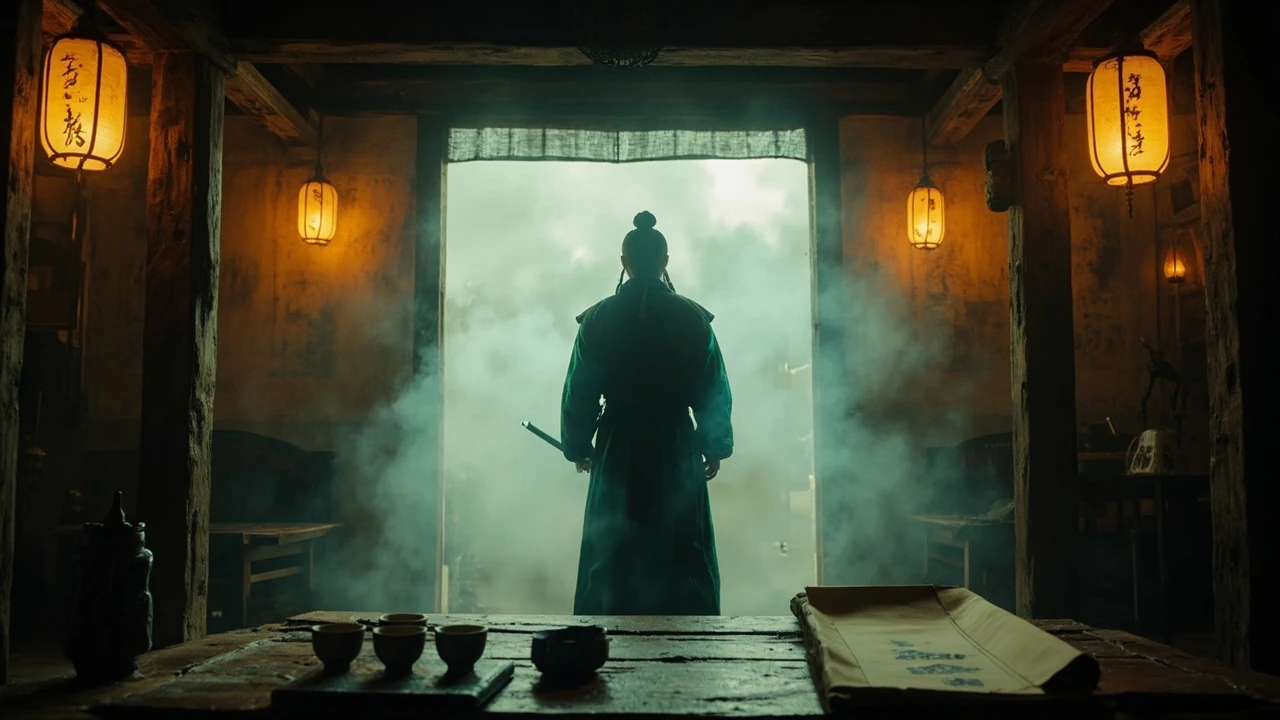
Where Winds Meet character creation explained for new players
Where Winds Meet is an open-world wuxia action RPG built around free-flow melee combat, internal martial arts, and a social hub world populated by other living players. Before any of that matters, every account steps into the character creation screen, and the decisions made there quietly shape the first hours of play. Some choices change only how a character looks. Others lock in a starting weapon archetype, a combat rhythm, and a small set of passive affinities that remain part of the build for many levels.
For a new player, the most useful question is not “what is the best face?” but “what decisions in the creator actually change the game?” This guide walks through the real systems behind the screen, separates cosmetic choices from mechanical ones, and flags the moments where a new player can regret a default pick. It is written as a player-facing production walkthrough: what you see, what it does, what to verify in your own client, and what to skip until you have more information.
Where Winds Meet launched in late 2025 as a free-to-play open-world title on PC, and the developers have already shipped multiple post-launch patches that have adjusted early-game systems. Several details below are confirmed by the official Wikipedia summary of the title and by community-reported behaviour that the developer has publicly acknowledged. Anything that could shift with a future balance pass is labelled as such rather than presented as a permanent rule.
What the character creator actually controls
The character creation flow in Where Winds Meet covers five broad layers, and they are not equally important to gameplay. The first layer is identity: name, displayed title, and pronouns. The second is appearance: face, body, hair, makeup, and outfit. The third is origin or background, which usually decides a small mechanical hook tied to starting area or starting quest. The fourth is combat archetype, the most mechanically meaningful pick in the creator. The fifth layer is a set of small affinity or trait choices that nudge your early stat curve and starting equipment.
Only the third, fourth, and fifth layers carry mechanical weight, and even within those the differences are smaller than the marketing screenshots suggest. The game is designed so that two characters with different creators can reach the same endgame build given enough play time. What the creator gives you is a head start on a particular combat identity and a slightly different first quest beat. Players who plan to play only a few hours per week should treat the creator as a meaningful but not permanent decision, because a free or low-cost appearance reset is available, and combat style can later be expanded rather than fully replaced.
It helps to think of the creator as a contract with three small print sections. The first section, cosmetics, is fully negotiable later. The second section, affinities, is mostly negotiable later for a small fee. The third section, background and archetype, is the only part that genuinely sticks, and even then it only sticks for as long as you keep that character as your main. Understanding that hierarchy is what separates a player who enjoys the creator from a player who feels ambushed by it.
The exact steps of the Where Winds Meet character creation flow
- Pick a region or name convention: the game lets you set a display region, which influences how other players see your name badge and which community pools you naturally interact with. There is no gameplay advantage to any specific region, but the choice is permanent for the account.
- Choose gender presentation and pronouns: this changes which cosmetic body sliders are available, including height, frame, and a small set of facial structure presets. It does not lock combat style or background.
- Customize face and body: face shape, jaw, eyes, nose, lips, eyebrows, skin tone, scars, tattoos, and aging presets are all adjustable here. The sliders are granular and have enough range to build a recognisable wuxia hero without micro-editing.
- Select hairstyle, facial hair, and accessories: hair, beard, earrings, hairpins, and headwear are the most expensive cosmetic slots, so plan to spend your free vouchers here if you care about long-term identity.
- Pick a starting outfit base: each base outfit has a small set of colour variants and a stat-free cosmetic theme. Outfits affect how NPCs greet you and what idle animations you have, but they do not give combat stats.
- Choose a background or origin: the most mechanically meaningful early decision. Backgrounds are tied to a starting region, a brief personal history, and a small permanent passive.
- Choose a starting combat archetype: usually a weapon school such as sword, dual blades, spear, or fist. This sets your first mastery track, your starting moveset, and the enemies you can parry comfortably in the tutorial.
- Confirm affinity or trait picks: a small tree of three or four binary choices that nudge your early stat spread, such as a small boost to internal arts cooldown or a small boost to parry window. These are tweakable later with a paid item.
- Review the summary screen, watch the short intro cinematic, and enter the open world.
Each step takes about two to three minutes on a first attempt, and the entire flow is designed to be completed in a single sitting. There is no separate “class screen” later, so the moment of choice is genuinely concentrated in the creator rather than spread across a tutorial. A useful habit is to screenshot the summary screen before you confirm, because the game does not always let you revisit the exact numbers after the cinematic plays.
Background and origin: the most overlooked decision
Background is the single creator option with the largest impact on the first ten hours of play, and it is also the one new players are most likely to skip. Each background in Where Winds Meet combines three elements: a starting region in the open world, a short personal quest that introduces a key NPC, and a small permanent passive that defines how that character approaches combat. The passive sounds minor, but it tends to compound with the combat archetype you pick next, so the two choices should be made together rather than in isolation.
A background that emphasises evasion, for example, pairs more naturally with a spear or fist archetype that relies on dodging windows. A background that emphasises internal arts regen pairs well with sword or dual-blade archetypes that spend chi quickly. The pairing is not enforced: the game does not stop you from choosing any combination, but the early-game content is balanced around the assumption that you will lean into the suggested pairing, and the first quest chains assume you already understand your passive.
For a new player, the practical advice is to read the background description carefully and to pick the one whose stated combat identity matches the kind of moment-to-moment combat you want. Players who enjoy patient parry-and-punish will find a different first hour from players who enjoy rapid stance dancing, and that difference is set in the creator, not in the open world. The background also influences which vendor stocks which crafting materials in your starter town, which is a small but real reason to read the description rather than skim it.
Combat archetype: the choice that defines your first fifty hours
Combat archetype in Where Winds Meet is closer to a starting weapon school than to a rigid class. Each archetype defines a base weapon, a small pool of starting stances, and a damage type that interacts with armour and shields. The game ships with four to five weapon archetypes at launch, and more are added through post-launch updates. The developer has confirmed in patch notes that additional weapons are planned, so the list below is the confirmed launch and early-post-launch set, not a permanent roster.
| Archetype | Base weapon | Core rhythm | Best background pairing | Learning cost for new players |
|---|---|---|---|---|
| Sword | Single-handed jian | Parry, deflect, punish | Internal arts background | Low |
| Dual blades | Paired short swords | Fast stance swaps, hit-and-run | Evasion background | Medium |
| Spear | Long-handled qiang | Reach control, mid-range pressure | Stamina background | Medium |
| Fist | Unarmed with martial arts | Close-range combos, grapples | Stamina background | High |
| Bow (post-launch) | Light or heavy bow | Ranged kiting, internal arts synergy | Internal arts background | Medium |
Archetypes are not final. As you play, you can unlock secondary weapon tracks by progressing through martial arts quests, and you can swap your active stance mid-combat. The creator only sets your first track, your starting moveset, and a small damage bonus while you are still on the tutorial. Players who want to experiment with multiple weapons should plan to use a second character slot once they reach a stable progression point on their main.
A common misconception is that the sword archetype is the easiest because it appears in most of the marketing material. In practice, the sword rewards patient timing more than brute force, and players who pick it expecting a forgiving default often bounce off the parry window. The fist archetype, by contrast, looks intimidating but offers shorter, more forgiving combo strings that map well to controller inputs. Choosing by rhythm rather than by appearance is the single most reliable way to enjoy the first ten hours.
Affinity and trait picks: the small numbers that matter early
After background and archetype, the creator asks you to confirm a small set of affinity or trait choices. These usually appear as a short list of binary questions, such as “did you train in the cold mountains” or “did you study under a wandering healer.” Each answer nudges your starting stat spread by a small percentage, and the differences are visible in the first quest when an enemy dies in three parries instead of four, or when an internal art recharges a second faster.
The exact list of affinity questions varies by patch, because the developer has used them to gently rebalance early-game difficulty. The most common early-game affinities cover four axes:
- Stamina: improves the size of the parry and dodge window, useful for players still learning the timing of deflection.
- Internal arts: reduces the cooldown of chi-consuming moves, useful for players who want to spend more time in their strongest stance.
- Health: increases the starting health pool, useful for players who plan to learn the combat system through trial and error.
- Qi: increases starting internal arts energy, useful for players who want to chain advanced moves from the first encounter.
None of these affinities is mandatory, and the difference between two valid builds is rarely more than one or two encounters. Players who feel locked in by an affinity choice should remember that the game sells a reasonably priced affinity-reset token in the cosmetic and convenience shop, and that the developer has confirmed that free resets are sometimes granted during seasonal events. A good rule of thumb is to pick the affinity that matches the encounter you keep dying to in the tutorial, because that signal is more honest than any guide.
Cosmetic choices that survive a name change or a remodel
Cosmetics deserve their own section because they are the part of the creator most players will revisit. Hair, facial hair, and headwear are the most visually expensive slots, and they define how recognisable a character feels in the social hub. Where Winds Meet uses a layered system where hairstyle, hair colour, and hair accessories are separate slots, so a player can keep a face and change an entire silhouette in a single menu.
Outfits are split into “base outfit” and “armour layer.” The base outfit is set in the creator and controls your civilian idle, while the armour layer is set later through gameplay and controls your combat idle. Mixing a civilian base with a combat armour layer is the standard way to express identity without giving up the stat-free costume system. The game also supports limited dye channels, so a few base outfits can be recoloured with vouchers rather than a full new purchase.
For players who care about long-term identity, the practical advice is to spend the free cosmetic voucher bundle on a single signature slot, usually hair or headwear, and to treat outfits as something you collect through play rather than something you buy on day one. The social hub rewards visible outfit investment with small reputation bonuses, and those bonuses compound with time spent in the open world. A small detail that catches new players off guard is that some headwear clips through certain hairstyles, so it is worth previewing the combination in the creator’s lighting preview before committing.
How character creation interacts with the social hub
Where Winds Meet’s social hub is a living, multiplayer version of the open world rather than a separate menu screen. When you finish the creator, you are dropped directly into a starter town populated by other players, and your creator choices become visible to them within seconds. The game encourages small social interactions such as a wave emote, a sparring invitation, or a cooperative quest, and your background is a quick way to flag the kind of content you are interested in.
The social layer also means that creator choices have a small but real economy effect. Some outfits and hairstyles are popular, and players who want a less crowded look will go off-meta in the creator. Others want to match the visual style of a particular school, which is a strong reason to pick a background and outfit pair that align with your intended combat archetype. The developer has not locked any cosmetic to gameplay performance, so a player’s choice is purely about personal identity rather than stat optimisation.
It is also worth knowing that the starter town you arrive in is partly determined by your background, and the starter towns have different vendor inventories, different daily quests, and different player densities. A crowded starter town is more social but has more competition for resource nodes, while a quieter starter town is easier to level in but slower to find a sparring partner. Neither is better, but the trade-off is real and it is set in the creator.
Common mistakes new players make in the Where Winds Meet character creator
The creator is forgiving, but a few patterns cause avoidable regret. The first mistake is choosing a combat archetype purely on the basis of a single trailer, without spending ten minutes in the tutorial moveset preview. The second is picking a background that contradicts the chosen archetype, which leads to a slightly less smooth first quest chain. The third is treating affinity picks as flavour text; they are not, and they do matter in the first ten hours. The fourth is assuming that the creator is final; appearance and affinity are reversible, while background and archetype are not, so the order of your decisions matters.
Another frequent mistake is rushing through the creator because the open world looks more interesting. The first twenty minutes after the creator determine your starter region, your starter NPC relationship, and the first wave of cooperative matchmaking, so spending an extra ten minutes in the creator usually pays off. A final mistake is treating the creator as a one-time event: many experienced players keep a small roster of characters, each one tuned to a different background and archetype, so they can switch between quest lines without losing progress on a different build. A useful external reference on how those progression choices play out across the first hours is the altchar breakdown of where winds meet character progression, which provides useful background for this point.
A subtler mistake is to ignore the pronouns and region fields because they look cosmetic, then realise later that the pronouns field is referenced in dialogue and the region field affects which community events you see on the calendar. Both fields are easy to set on day one and awkward to revisit later, even though they are technically editable from the settings menu.
Resetting and editing your character after creation
Where Winds Meet offers three distinct reset systems, and they do not interfere with each other. Appearance reset changes your face, body, hair, and outfit base. It is sold for a small premium-currency fee and is also granted for free once per account at a low level threshold. Affinity reset changes your trait picks and costs a slightly higher premium-currency fee. Background and combat archetype reset is not sold as a single item; the developer expects players to create a new character if they want a different starting identity, although the seasonal events sometimes grant a free slot.
For most players, the practical pattern is to commit to a background and combat archetype, then use appearance and affinity resets freely as taste evolves. Because the social hub is a shared world, switching identity is visible to other players, and many of them treat a fresh appearance as a soft “new character” signal even when the gameplay build has not changed. A reasonable budget for a returning player is one appearance reset per major patch and one affinity reset per seasonal event, which keeps the premium-currency spend predictable.
What experienced wuxia players do differently in the creator
Players coming from long-running wuxia and martial arts MMOs tend to use the creator as a soft roleplay decision rather than a build decision. They start from a fictional archetype, such as a wandering swordsman or a monastery-trained fist fighter, and they let the background and outfit follow from that story. The combat archetype is then chosen to support the imagined character, not the other way around. The result is a more coherent first hour, because the NPC relationships, the starter quest, and the idle animations all reinforce the same identity.
That approach works because Where Winds Meet’s open world is dense with small narrative beats that reward a player who has a stable character concept. Players who treat the creator as a build optimisation screen tend to bounce between alts more often and engage less deeply with the social layer. Neither approach is wrong, but the production team has clearly designed the creator to reward the roleplay-first style with cleaner first-quest pacing. Experienced players also tend to read the background text aloud, because the writing carries a small amount of mechanical information that is easy to miss when skimmed.
How the developer has changed the creator since launch
Since launch, the developer has shipped several patches that touch the creator directly. The most visible changes have been the addition of a small number of new hairstyles and headwear slots, the addition of a new combat archetype in a post-launch update, and a small rebalance of the affinity picks to smooth the early-game difficulty curve. The developer has also added a creator preview mode that lets you see your character idle in three different lighting conditions before you commit, which is useful for players who care about a specific screenshot or portrait.
None of these changes has invalidated the basic structure of the creator. Background, archetype, and affinity remain the three mechanically meaningful layers, and they continue to define the first ten hours of play. Players who started at launch and are returning after a long break should expect the creator to look slightly different, but the underlying decision logic is unchanged. A full breakdown of the live game systems and how the creator has evolved is documented in the open Wikipedia article on Where Winds Meet, which tracks the post-launch patch history in detail.
Production lessons from the creator for new game developers
Where Winds Meet’s creator is a useful reference for studios designing their own character creation systems because it is small, fast, and clearly separated into cosmetic and mechanical layers. A few production decisions stand out. First, the creator exposes the combat archetype preview before the player commits, which reduces regret. Second, it gates the most expensive cosmetic slots behind a separate voucher system, which lets the team balance economy and identity independently. Third, it gives the player a small set of affinity picks with visible numbers, which is a good middle ground between a pure stat screen and a pure roleplay choice.
For a studio building a similar system, the production takeaway is that the creator should be designed alongside the first quest chain, not before it. Where Winds Meet’s creator works because the starter region, the first NPC, and the suggested combat pairing are all built around the same identity. A creator that exists in isolation, with no first-quest reinforcement, tends to feel disposable. The Where Winds Meet team has also been careful to ship a creator preview mode rather than a full custom demo, which is a useful compromise between production cost and player trust.
One detail worth highlighting is how the creator handles its scope creep. Each post-launch patch has added at most one new cosmetic category or one new archetype, and the team has avoided changing the underlying structure of the five layers. That restraint is what keeps returning players oriented, and it is a useful pattern for any live-service studio weighing when to expand versus when to consolidate.
Decision checklist before you finalise your character
Before you confirm, it is worth running through a short decision checklist. The checklist is not a build guide, because the meta shifts with each patch, but it is a reliable way to avoid the avoidable regrets that show up in the first ten hours.
- Have you spent at least ten minutes in the combat archetype preview, including the parry and dodge timing?
- Does your background description match the combat rhythm you actually want to play?
- Have you read the affinity picks as numbers rather than flavour text?
- Have you decided which signature cosmetic slot you want to spend your free voucher on?
- Do you plan to use a single main character or a small roster of alts?
- Have you confirmed the current patch notes for any creator changes since launch?
- Do you understand that appearance and affinity are reversible, but background and archetype are not?
- Have you checked which starter town your background routes you into, and does that match your preferred play schedule?
| Creator layer | Mechanical weight | Reversibility | Typical first-hour signal |
|---|---|---|---|
| Identity (name, pronouns, region) | None | Mostly permanent; region locked per account | Social hub tag, dialogue references |
| Appearance (face, body, hair, outfit base) | None | Reset for a small fee; one free reset early | NPC greetings, idle animations |
| Background / origin | High: starter region, NPC chain, permanent passive | Not sold as a single item; new character required | First quest pacing, vendor inventory |
| Combat archetype | High: starting moveset, damage type, mastery track | Expandable, not replaceable; alt slot recommended | Tutorial enemy patterns, parry windows |
| Affinity / trait picks | Medium: small stat spread nudges | Reset token available; occasional free seasonal reset | First few encounters, chi economy |
Players who can answer yes to most of these usually end up with a character they enjoy through the first major story arc, which is the point at which the creator stops mattering and the open world takes over. The checklist is short on purpose, because a longer list tends to push players back into analysis paralysis rather than into the game.
Frequently asked questions
Does Where Winds Meet character creation lock in a class?
No. The creator sets a starting weapon archetype and a starting background, both of which shape the first hours of play, but you can unlock secondary weapon tracks later and your combat identity is defined by the skills you actually use, not the choice you made in the creator. Endgame builds are determined by quest unlocks, internal arts, and gear, so the creator is a starting point rather than a permanent class lock.
Can you change your appearance after character creation?
Yes. Appearance edits are sold for a small premium-currency fee and are also granted for free once per account at a low level threshold. You can change face, body, hair, and outfit base at any time. The change is visible to other players in the social hub, and many experienced players use it to mark a soft “new character” moment without losing progress.
Can you change your background or combat archetype later?
Background and combat archetype are not sold as a single reset item. The developer expects players to create a new character if they want a different starting identity, although seasonal events sometimes grant a free character slot. Affinity picks are reversible through a separate, slightly more expensive reset token.
Which background is best for a new player?
There is no universal best background because the choice is tied to the combat archetype you want to play. New players who enjoy patient parry-and-punish usually find the internal arts background most comfortable, while players who prefer fast stance swaps usually prefer the evasion background. Read the background description and pick the one whose stated combat identity matches your preferred rhythm.
Does gender choice affect gameplay in Where Winds Meet?
Gender choice affects which cosmetic body sliders are available, including height, frame, and a small set of facial structure presets. It does not lock combat style, background, or affinity, and the gameplay systems are identical across the available gender presentations. It is a pure identity choice with no mechanical effect.
How long does the Where Winds Meet character creation take?
A first-time creator usually takes between fifteen and twenty-five minutes, including the combat archetype preview and the affinity picks. Experienced players who already know their preferred build can finish in five to seven minutes, and the developer has confirmed that future updates will add a “skip to summary” option for alts.
Are there any creator choices that affect multiplayer matchmaking?
Region choice can affect which community pools you naturally interact with, but it does not lock you out of any specific content. Background and combat archetype do not affect matchmaking, because the social hub is a shared open world rather than a class-based instance system. The only soft effect is that other players can see your background and archetype through your displayed title, which influences who approaches you for cooperative content.
Does the creator change with post-launch patches?
Yes. The developer has shipped several creator updates since launch, including new hairstyles, new headwear slots, a new combat archetype, and small rebalances to the affinity picks. The basic structure of background, archetype, and affinity has remained stable, and the official patch notes are the best place to confirm the current state before you finalise a character.
Is the creator the same on PC and console?
The creator is functionally identical across PC and console, with only minor input changes for controller versus mouse. All backgrounds, archetypes, and affinity picks are available on every supported platform, and the cosmetic slots are shared. The social hub is also shared, so a character created on one platform is visible to players on the others when both are in the same region.
What should a new player do if they regret their creator choice?
If you regret a cosmetic choice, use the appearance reset. If you regret an affinity pick, use the affinity reset. If you regret a background or archetype, the cleanest option is to create a new character on a free slot, replay the short tutorial, and use the original as a stable alt. Trying to brute-force a wrong background usually leads to a frustrating first quest chain, while a clean alt takes only a few extra minutes to set up.




Leave a Reply